Weapon Acoustic Signature Payload

Strategic Partnership
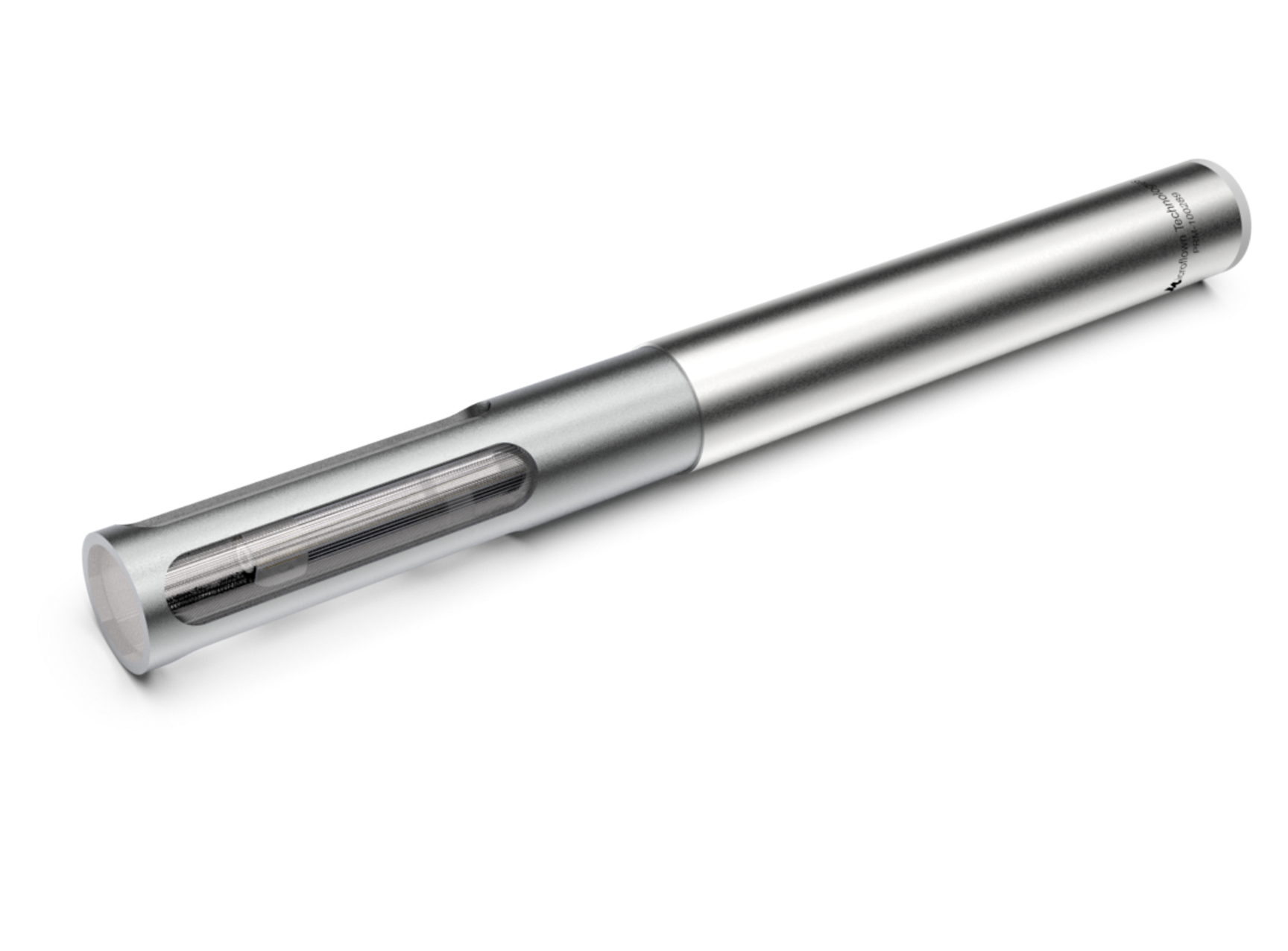
The WASP (Weapon Acoustic Signature Payload) is a compact, fully passive acoustic detection module designed for seamless integration with NVIDIA Jetson-nano powered with WRX AI systems.
Purpose-built for real-time detection, classification, and localization of weapon-originated acoustic events, the WASP module provides critical intelligence to forward observers, enhancing battlefield situational awareness while maintaining stealthy operation.
The system detects and measures the direction of arrival (DOA) of impulsive sounds such as:
Artillery fire
CBMs
Mortar launches
Small arms fire
By calculating the DOA, WASP enables rapid orientation of the UAV’s camera, Airborne Cameras, ISR Antenna or operator’s attention to the threat source, significantly shortening the sensor-to-shooter loop.
Extended Acoustic Capabilities
Beyond traditional battlefield threats, WASP can be configured with a customizable sound library, allowing it to recognize and classify a wider range of acoustic signatures.
This flexibility makes the system adaptable for diverse mission requirements, including:
Detection of vehicle and aircraft engine noise
Tracking of unmanned aerial system (UAS) acoustic signatures
Localization of explosions or blast events
Identification of environment-specific sounds (e.g., generators, industrial activity, or maritime acoustics)
This modular sound recognition capability ensures that WASP is not limited to pre-defined threats but can evolve alongside mission demands, supporting multi-domain operations and dynamic threat environments.
WASP leverages state-of-the-art Artificial Intelligence to transform raw acoustic data into actionable intelligence.
At its core, the system integrates advanced machine learning models trained on vast datasets of battlefield acoustic signatures, enabling it to distinguish between threats such as artillery, mortars, rockets, UAVs, and small arms fire with unmatched accuracy.
The AI-driven processing pipeline is built around three key pillars:
Real-Time Signal Processing
WASP continuously filters and processes acoustic inputs using deep-learning algorithms that suppress environmental noise, isolate impulsive events, and extract distinct acoustic features in milliseconds.
Automated Threat Classification
Leveraging neural network–based classifiers, WASP can autonomously identify and categorize weapon systems, differentiating between calibers and launch types, while dynamically updating its confidence levels.
Adaptive Learning & Continuous Improvement
WASP’s AI framework is designed to evolve. Through reinforcement learning and data fusion with other sensors, it adapts to new sound profiles encountered in modern battlefields—ensuring resilience against emerging threats, novel weapon types, or adversary countermeasures.
The result is a stealthy, fully passive, and intelligent sensing system that reduces operator workload, accelerates decision-making, and expands the tactical advantage in contested environments.
Parameter
Specification
Module Type Self-contained passive acoustic detection & localization payload
Integration Platform NVIDIA JETSON NANO
Detected Threat Types Artillery, CBMs, mortars, small arms fire and others
Length 180 mm
Diameter 62 mm
Weight 150 g
Power Consumption 2.5 W (Standby @ 0.01 W)
Artillery & CBMs Detection Range* Up to 40-60 km
Mortars Detection Range* Up to 10-15 km
Small Arms Fire Detection Range* Up to 2.5 - 5 km
Direction of Arrival (DOA) Error ~ 6°**
Response Time < 2 seconds
Environmental Protection Wind shielding, IP54 enclosure
Mounting System Quick-latch, tool-free
Data Recording Internal event logging
Operating Temperature -20°C to +55°C
Real-time Signature Detection
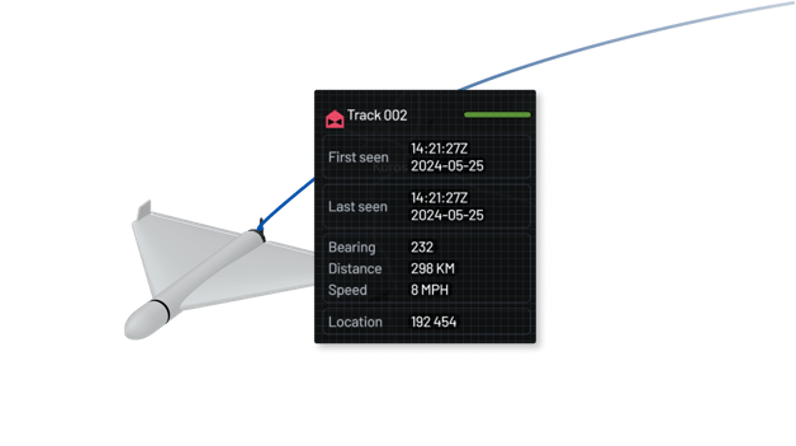
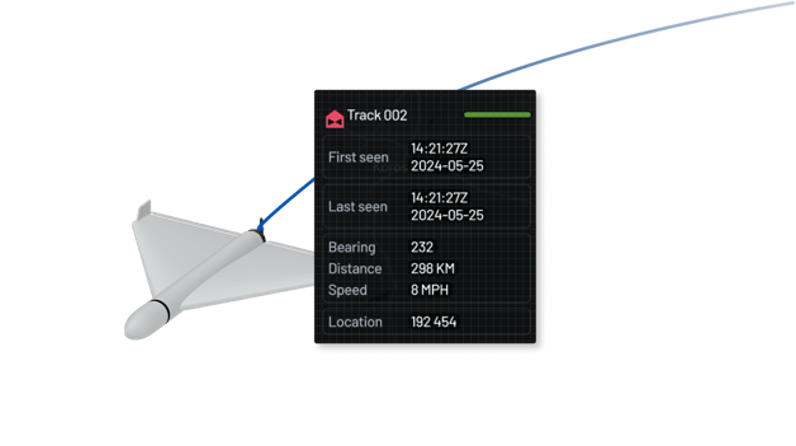
WASP continuously detects and identifies signatures from UAVs, Airplanes in real time, filtering out environmental noises to isolate drone detections.
Correlation Engine
WASP ingests and processes data to precisely
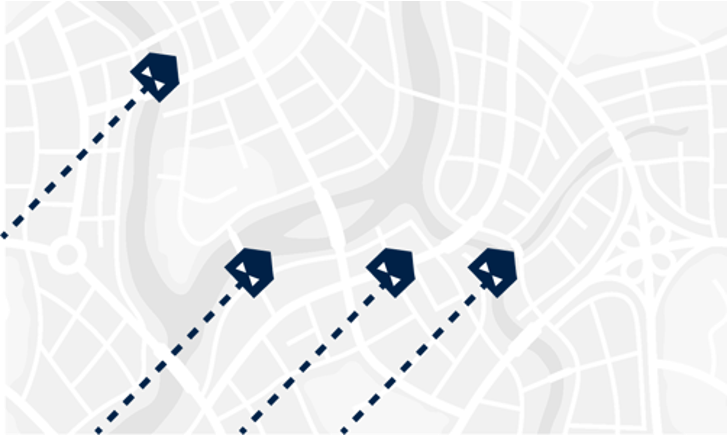
determine sound position and movement. It then correlates the detections to improve tracking accuracy and reduce false positives.
Multi-object Tracking
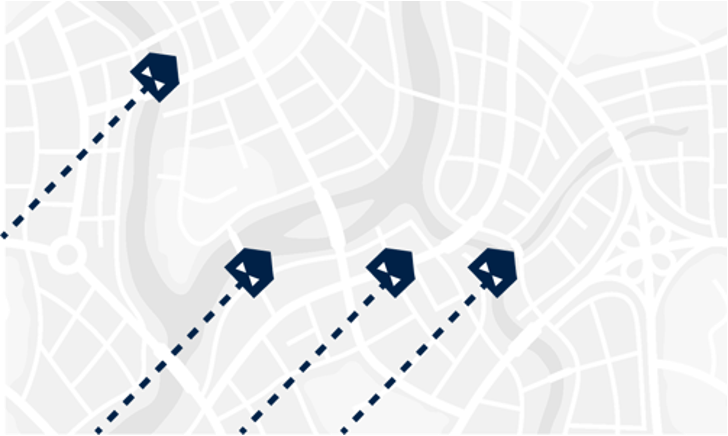
WASP can detect, track, and classify multiple sounds simultaneously in an unpredictable environment.

WRX Aerospace - WASP Tech Spec

* Detection range assumes the event of interest generates a shock wave.
** DOA error is the average angular deviation to the acoustic source (muzzle blast or shock wave). The shock wave may have a different origin from the muzzle blast; estimated direction refers to the detected acoustic source, not necessarily the shooter’s position.
Note: Detection ranges are preliminary and highly dependent on environmental factors such as terrain, atmospheric conditions, and background noise.